

How Can Plumbers Own Search Results for Every Major Service?
Sep 18, 2026


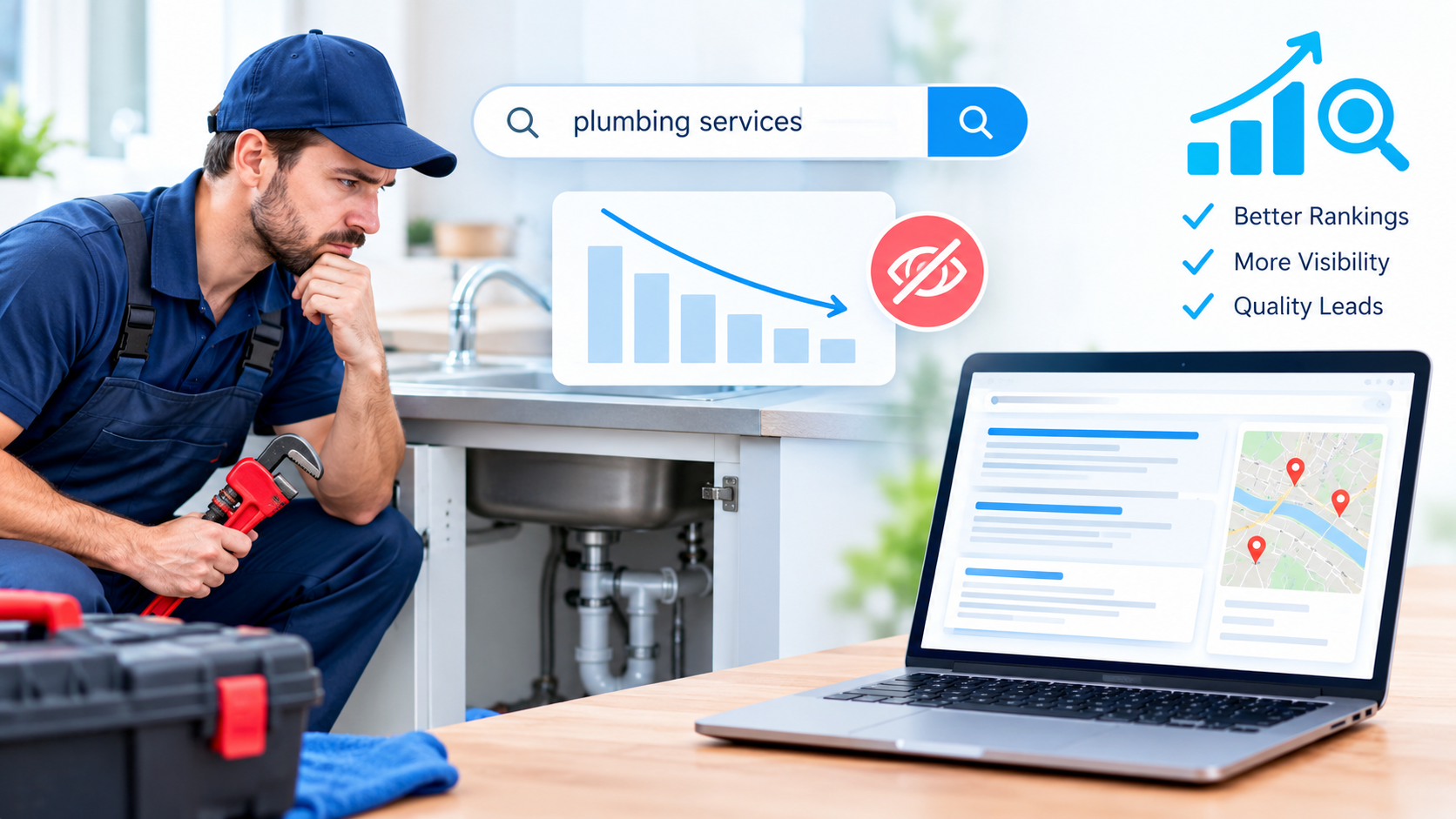
Your most profitable plumbing services may be the ones you want customers to find first, yet they may receive little or no organic search traffic. A plumbing website can rank for general terms while missing searches for high-value services such as emergency plumbing, sewer line repair, water heater replacement, leak detection, hydro jetting, or repiping.
The problem is often not the quality of your services. It is how your website communicates those services to search engines and potential customers.
In this guide, you will learn why valuable plumbing services can remain invisible in search results and what you can do to build stronger visibility around them.
One of the biggest problems is assuming that customers search for services using the same terminology you use internally.
You may describe a service as “advanced drainage solutions,” while a customer searches for “emergency drain cleaning near me.” You may offer “water system replacement,” while the actual search is “water heater replacement cost.”
Search engines try to understand the intent behind a query. If your service page does not clearly address that intent, it may struggle to appear for valuable searches.
Before optimizing a page, identify:
This creates a stronger foundation for SEO for plumbers because your content is built around real customer needs rather than service names alone.
A page titled “Plumbing Services” cannot effectively compete for every individual service you provide.
If drain cleaning, sewer repair, water heater installation, gas line repair, and leak detection are all discussed on one general page, search engines may have difficulty determining which service the page should rank for.
Your highest-value services deserve dedicated, detailed pages. A structured approach to building high-value plumbing service pages can give each important service a clearer search-focused destination.
For example, instead of placing everything under one generic page, create focused pages such as:
Each page should explain the service, problems it solves, signs that indicate the service is needed, the process involved, relevant costs or considerations, and when customers should contact a professional.
This gives search engines clearer topical signals while giving customers a more useful destination.
High search volume does not automatically mean high business value.
A plumbing company might spend months targeting broad phrases such as “plumber” or “plumbing,” while overlooking more specific searches that indicate stronger buying intent.
Consider the difference between:
“What causes a clogged drain?”
and
“Emergency drain cleaning plumber near me.”
The first may represent someone researching a problem. The second suggests someone may be ready to hire a plumber.
Your keyword strategy should therefore consider both search volume and commercial intent.
Look for keywords connected to:
A properly structured Plumber SEO Services strategy can help connect these high-intent searches with the services that generate the most revenue.
Customers are more likely to trust a plumbing company when its website demonstrates genuine expertise.
A thin page saying “We provide professional sewer repair” provides very little evidence of expertise.
A stronger page could explain:
This type of content can strengthen topical relevance while demonstrating first-hand knowledge.
Your content should also make it easy for visitors to understand who performs the work, what experience the company has, and what happens after they request service.
Many plumbing searches have strong local intent.
Customers often search for services based on their city, neighborhood, or immediate location. If your service pages provide little geographic relevance, you may miss valuable local searches.
Instead of simply mentioning a city repeatedly, build genuine local relevance.
For example, a service page can naturally explain:
Your Google Business Profile, website location signals, citations, reviews, and service-area pages should also communicate consistent business information.
Local relevance should support the service—not turn the page into a collection of unnatural city keywords.
Even a well-written service page can struggle if it is isolated from the rest of your website.
Internal links help search engines understand how your pages relate to one another.
For example, your water heater replacement page could naturally link to:
Likewise, an emergency plumbing page could connect to individual emergency services.
Use descriptive anchor text that explains what the linked page covers rather than generic phrases such as “learn more.”
A strong internal linking structure creates a connected service ecosystem instead of a collection of disconnected pages.
Not every page needs to be extremely long. It needs to be sufficiently useful.
A high-value service page should answer the questions a potential customer is likely to have before contacting you.
For example, a sewer repair page could address:
Explain symptoms such as recurring backups, slow drains throughout the property, sewage odors, unusual lawn changes, or repeated blockages.
Discuss common causes such as root intrusion, damaged pipes, corrosion, shifting soil, or blockages.
Explain inspections, camera inspections, testing, and other appropriate diagnostic methods.
Describe relevant repair approaches and explain when repair or replacement may be appropriate.
This structure makes the page useful to both customers and search systems.
Search behavior is increasingly influenced by AI-generated results and conversational search.
A page that simply repeats keywords may not provide enough useful information for AI systems to confidently understand and reference your business.
Your service content should clearly establish:
Use clear headings, direct answers, specific terminology, related entities, and supporting information.
This approach supports traditional search while making your content easier for AI-driven search experiences to interpret.
Sometimes the problem is not traffic—it is what happens after someone lands on the page.
A visitor searching for emergency sewer repair should immediately understand:
Avoid hiding contact information at the bottom of a long page.
Use relevant calls to action throughout the page without interrupting the educational content.
For example:
Need professional help with a plumbing problem? Contact your plumbing team to discuss your service needs and determine the appropriate next step.
The CTA should match the search intent of the page.
Start with your revenue data rather than your existing keyword rankings.
Identify the services that are:
Then evaluate each service page.
Ask:
Prioritize pages based on business value instead of optimizing every page equally.
The ultimate goal of plumbing SEO is not to collect rankings. It is to make your most valuable services easier for the right customers to discover.
If your best plumbing services are not receiving search traffic, look beyond keyword rankings. Examine search intent, service-page structure, topical depth, local relevance, internal linking, trust signals, and conversion paths.
A focused profitable plumbing jobs SEO strategy can help connect SEO resources with the services that have the strongest commercial value.
When these elements work together, your website can create stronger connections between what customers search for and the services you actually want to sell.
If your highest-value plumbing services are not attracting the search traffic they deserve, a more focused SEO strategy may be necessary. Contact us to evaluate your service pages, search intent, content structure, and opportunities for stronger organic visibility.
Common reasons include weak keyword targeting, unclear search intent, thin content, poor internal linking, weak local signals, or competition from more authoritative service pages.
Important services generally benefit from dedicated pages when they have distinct search intent, customer needs, or commercial value.
No. High-intent, service-specific keywords can be more valuable than broad keywords because they may attract customers who are closer to making a hiring decision.
Strong local signals help search engines connect your services with customers searching in your service area. Location relevance, business information, reviews, and useful local content can all contribute.
Effective SEO connects relevant searches with focused service pages, useful information, local relevance, trust signals, and clear conversion paths, helping attract people who are actively looking for plumbing solutions.