

Why Do Plumbing Websites Need Content Beyond Service Pages?
Oct 27, 2026


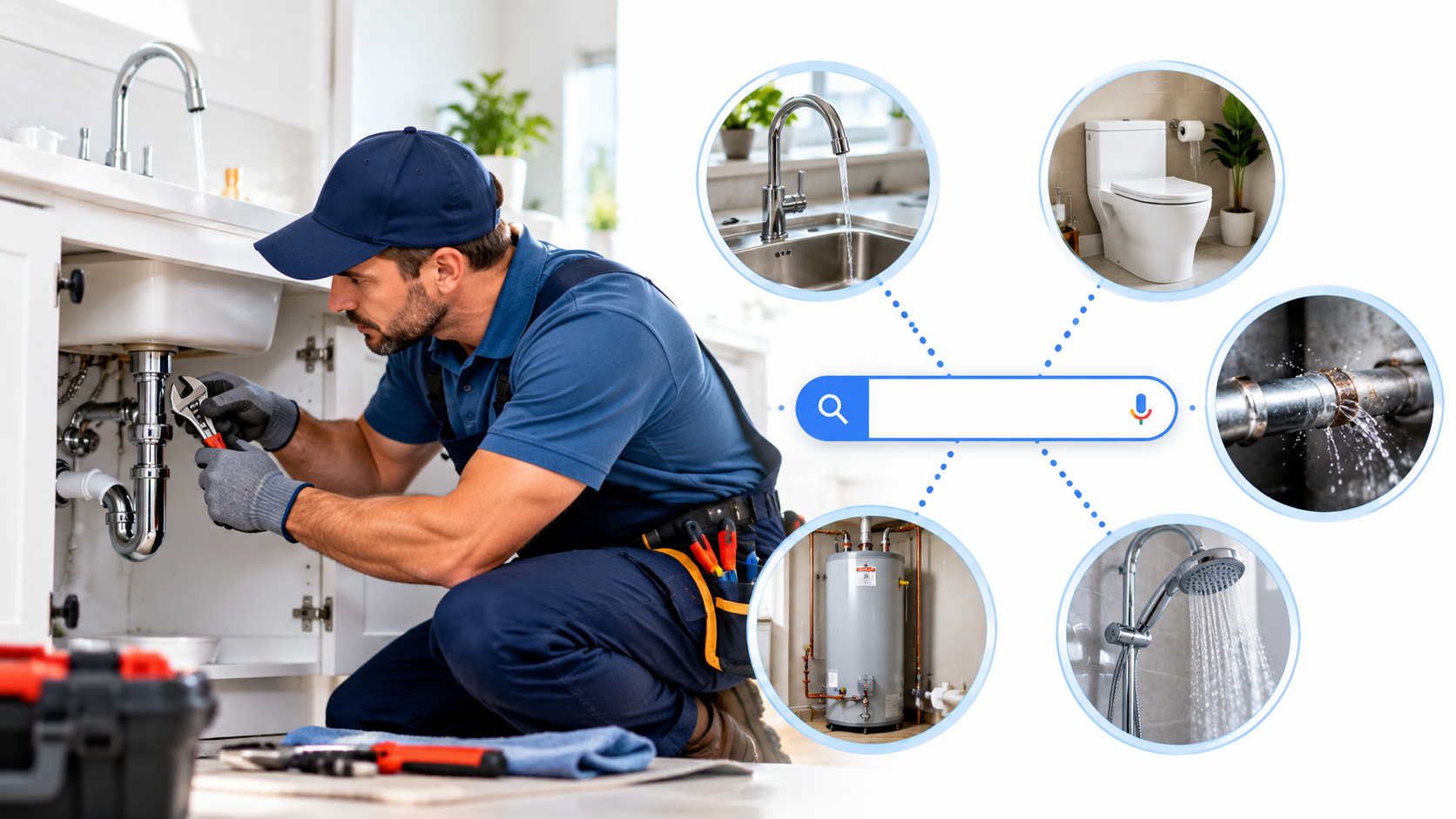
A plumbing company does not need to create a completely new service every time it wants to discover another SEO opportunity. In many cases, one existing plumbing service can become the foundation for multiple useful pages, supporting articles, FAQs, local searches, and conversion opportunities.
Consider a service such as drain cleaning. A customer may search for “drain cleaning,” while another may search for “why is my kitchen sink clogged,” “emergency drain cleaning,” “how much does drain cleaning cost,” or “drain cleaning near me.”
All these searches are connected to the same core service, but they represent different customer needs.
This creates an important opportunity for your plumbing website. Instead of repeatedly targeting the same keyword, you can build content around the problems, questions, decisions, and local requirements associated with one service.
A well-planned professional plumber SEO services strategy to improve search visibility can turn that service into a complete topic cluster that supports rankings, authority, and qualified leads.
The first step is to choose a service that matters commercially to your business.
This could be:
Once you choose the service, build one comprehensive primary service page around it.
That page should explain what the service is, which problems it solves, when customers need it, what the process generally involves, and what factors may affect the service.
The important point is that this primary page should satisfy the main commercial intent.
You can then use supporting content to answer related questions that customers may have before, during, or after deciding to hire a plumber.
This is where SEO for plumbers becomes more strategic. Instead of treating every keyword as a separate target, you build a connected content ecosystem around a commercially important service.
For a stronger foundation, identify and address common SEO mistakes that plumbing businesses should avoid when planning your website structure and content.
Image Suggestion: A plumber working on a central plumbing system with different service components branching from it, such as drains, pipes, water heaters, and sewer lines. No text overlay.
Customers do not always search for a service by its professional name. They often search for the problem they are experiencing.
For example, a customer may not know that they need professional leak detection. They may search:
These questions can reveal valuable content opportunities.
If leak detection is one of your core services, you can create useful resources explaining common warning signs, possible causes, when professional inspection is appropriate, and what customers should expect from the process.
The important distinction is that each article should provide genuinely different information.
You are not creating multiple pages simply to repeat the phrase “leak detection.” You are addressing different customer problems that naturally connect to the service.
This approach makes SEO for plumbing more useful because your website becomes a resource for customers who are still identifying their problem.
Every plumbing service creates questions. Those questions can become some of your most useful supporting content.
For example, a water heater repair service could lead to topics such as:
This addresses a common problem-based search and helps users understand possible reasons for the issue.
This targets customers who are noticing unusual performance but have not yet decided whether professional service is necessary.
This addresses a practical question that customers may ask before contacting a plumber.
This supports users who are comparing their options and may be closer to making a purchasing decision.
The service has not changed. The customer questions have.
That distinction allows you to expand your content without creating unnecessary keyword repetition.
One of the biggest mistakes in content planning is treating every keyword as if it has the same intent.
A customer searching “what causes a clogged drain?” is at a different stage from someone searching “professional drain cleaning company.”
Your content should recognize that difference.
These searches help customers understand a problem.
Examples include:
These topics can introduce your expertise to potential customers.
These searches indicate that the customer wants to understand what action to take.
Examples include:
These searches can demonstrate practical knowledge while helping customers recognize when professional assistance may be appropriate.
These searches are closer to hiring intent.
Examples include:
These searches should generally lead toward strong service pages rather than purely informational articles.
For urgent service-related searches, you can build an SEO funnel for emergency plumbing calls that connects customer needs with relevant information and a clear path to contact the business.
Understanding these differences is a core part of effective SEO services for plumbers because the objective is not simply to generate traffic. It is to attract visitors with the right intent.
A service can also create legitimate local search opportunities.
For example, if you provide sewer line repair across multiple service areas, customers may search for:
However, local SEO should not become a process of creating dozens of nearly identical city pages.
Each location-focused page should have a legitimate purpose and provide information relevant to customers in that market.
You can discuss service availability, local customer considerations, common property-related concerns, service expectations, and other information that genuinely helps people in the area.
This gives your website stronger local relevance without relying on repetitive location-based pages.
For businesses investing in plumbing SEO services, the goal should be to build useful local resources rather than simply inserting city names into existing content.
Customers often need to make decisions before contacting a plumber. That creates another group of content opportunities.
For example, a water heater service can support content about:
This type of content is valuable because it addresses the customer’s decision-making process.
Instead of simply telling the visitor that your company provides water heater repair, you help them understand whether repair may be appropriate, what warning signs to consider, and when professional assessment is worthwhile.
Detailed information can also strengthen perceived expertise and support E-E-A-T by demonstrating practical knowledge instead of relying on generic marketing language.
For example, if your business generates the most revenue from particular services, develop SEO strategies around your most profitable plumbing jobs to prioritize topics that support meaningful business goals.
Creating supporting articles is not enough. Those articles should have logical relationships with your core service pages.
For example:
Main Service: Water Heater Repair
Supporting topics:
When relevant, these pages can internally link to the main water heater service page using descriptive anchor text such as professional water heater repair services instead of generic phrases such as “click here” or “learn more.”
The same principle applies to other plumbing services. An article about drain problems can naturally link to a drain cleaning service page, while an article about emergency pipe problems can link to an emergency plumbing page.
Descriptive internal links help users understand what they will find after clicking while giving search engines additional context about the relationship between pages.
Your website structure should also make important commercial pages easy to discover. For example, create separate website pages for high-value plumbing services when each service requires its own information, customer intent, or conversion path.
Frequently asked questions are another way to expand a service topic. However, FAQs should not be added simply to increase page length. They should answer questions customers genuinely ask.
For example:
Recurring clogs, slow drainage, unpleasant odors, or repeated backups may indicate a deeper problem that requires professional assessment.
Not every leak requires emergency service, but rapidly spreading water, major pipe breaks, or leaks that threaten property damage should be addressed immediately.
The appropriate inspection frequency can depend on the age and condition of the plumbing system, property type, previous problems, and other factors.
Clear question-and-answer formatting can make information easier for people to scan and understand. It also supports an Answer Engine Optimization approach because important questions and direct answers are clearly separated.
For AI-powered search experiences, the same principle applies: provide specific, useful information instead of vague statements designed only around keywords.
Generative Engine Optimization requires more than adding words such as “AI” or “GEO” throughout an article.
Your content should provide information that is clear, specific, trustworthy, and useful.
For plumbing websites, first-hand expertise can include:
For example, instead of saying that “pipe leaks can cause damage,” explain the types of warning signs a homeowner may notice and why early professional assessment can matter.
Specific information creates stronger context for readers and AI-powered search systems.
This also supports E-E-A-T because your website demonstrates knowledge rather than simply claiming expertise.
More pages do not automatically produce better SEO.
Imagine creating separate pages for:
If every page provides essentially the same information, you have not created five SEO opportunities. You have created repetitive content.
Instead, look for meaningful differences in intent.
A new page may be justified when it addresses a distinct service, problem, question, audience, emergency situation, or legitimate local need.
This is particularly important when developing affordable SEO for plumbers because a good strategy should focus resources on valuable content rather than producing large quantities of thin pages.
Your next content opportunity may already be visible in your website data.
Look at:
Suppose your water heater service page receives impressions for “water heater keeps shutting off,” but the page does not answer that question in detail.
That could be an opportunity for a dedicated supporting article.
Similarly, if customers repeatedly call your business asking whether sewer repair requires excavation, that question could become a useful educational resource.
This turns content planning into a data-driven process rather than a guessing game.
Informational content should ultimately help users understand what to do next.
That does not mean every paragraph should contain a sales pitch. Instead, provide a logical next step.
For example, after explaining the warning signs of a hidden leak, you can guide the reader toward professional leak detection when the situation requires expert assessment.
After explaining recurring drain problems, you can direct readers toward your drain cleaning service.
The transition should feel natural because it follows the customer’s problem.
This is where strong best SEO for plumbers strategies connect organic visibility with actual business goals.
Traffic alone is not the final objective.
You want qualified visitors to understand the problem, trust the information, recognize the value of professional help, and have a clear way to contact your business.
You can apply the same process to almost every important plumbing service.
Core Service
↓
Customer Problems
↓
Common Questions
↓
Different Search Intents
↓
Local Search Opportunities
↓
Supporting Educational Content
↓
Internal Links
↓
FAQs
↓
Conversion Path
This framework allows you to expand your website systematically.
For example, one sewer line repair service can potentially support content about warning signs, causes of sewer problems, repair methods, inspection questions, emergency situations, repair versus replacement, local service considerations, and customer FAQs.
The important part is maintaining topical relevance.
Every new piece of content should strengthen the overall service topic instead of taking the website in an unrelated direction.
Turning one service into multiple valuable SEO opportunities requires more than finding related keywords.
You need to understand customer intent, content architecture, internal linking, local SEO, technical optimization, E-E-A-T, AEO, GEO, and conversion-focused content.
A professional Plumber SEO services strategy can help you identify which services deserve more topical coverage, which questions your customers are actually searching for, and how supporting content should connect with your commercial pages.
The strongest strategy is not necessarily the one that produces the most pages. It is the one that produces the most useful coverage around the services that matter to your business.
Your existing services may already contain dozens of useful search opportunities. The challenge is finding them, organizing them correctly, and turning them into content that serves both customers and search engines.
If you want to build a stronger search presence around your most valuable plumbing services, choose the next step below.
Discuss Your Plumbing SEO Strategy
Discuss your existing services, target markets, current website structure, and SEO goals with the team so you can identify where additional content can create meaningful opportunities.
The objective is simple: help more potential customers discover your plumbing business when they are researching a problem, comparing solutions, or ready to request professional service.
Yes. A single service can support content around customer problems, questions, service decisions, emergencies, local searches, maintenance, costs, and related topics. Each page should serve a distinct search intent rather than repeating the same information.
Not necessarily. Prioritize services that are commercially valuable, have meaningful customer demand, or generate recurring questions. Supporting content should strengthen an important service topic rather than exist simply to increase the number of website pages.
It helps create deeper topical coverage around important plumbing services. Instead of relying on one page for every related search, your website can provide useful answers to different customer needs while creating logical internal connections between educational and commercial pages.
Yes. Clear explanations, well-defined questions, trustworthy information, logical topic relationships, and evidence of practical expertise can make content easier for AI-powered search systems to understand and evaluate.
Start with your most valuable services and examine customer questions, Search Console queries, service calls, impressions, conversions, and local search demand. Prioritize topics that solve genuine customer problems and have a clear relationship with your core services.